The Business Value of Double Materiality Assessments: Real or Perceived?

Double Materiality is now an established part of sustainability management and reporting, but for boards and executives, the more important question is whether the investment creates value beyond compliance.
Materiality – the AA1000 AccountAbility Principle that started it all
In 1999, AccountAbility’s AA1000 Framework emphasised stakeholder engagement as the basis for sustainability accounting, auditing and reporting. Our 2003 publication, Redefining Materiality, defined a methodology that extended the concept of materiality beyond financial impacts to include organizations’ social and environmental impacts on stakeholders. That same year, the AA1000 Assurance Standard (v1) became the first international assurance standard specifically designed for sustainability information, grounded in stakeholder-based materiality.
Since 2008, Materiality has been codified as one of the AA1000 AccountAbility Principles, defined as the prioritization of sustainability topics that impact the organization and are important to stakeholders.
Double Materiality’s Rise to Prominence
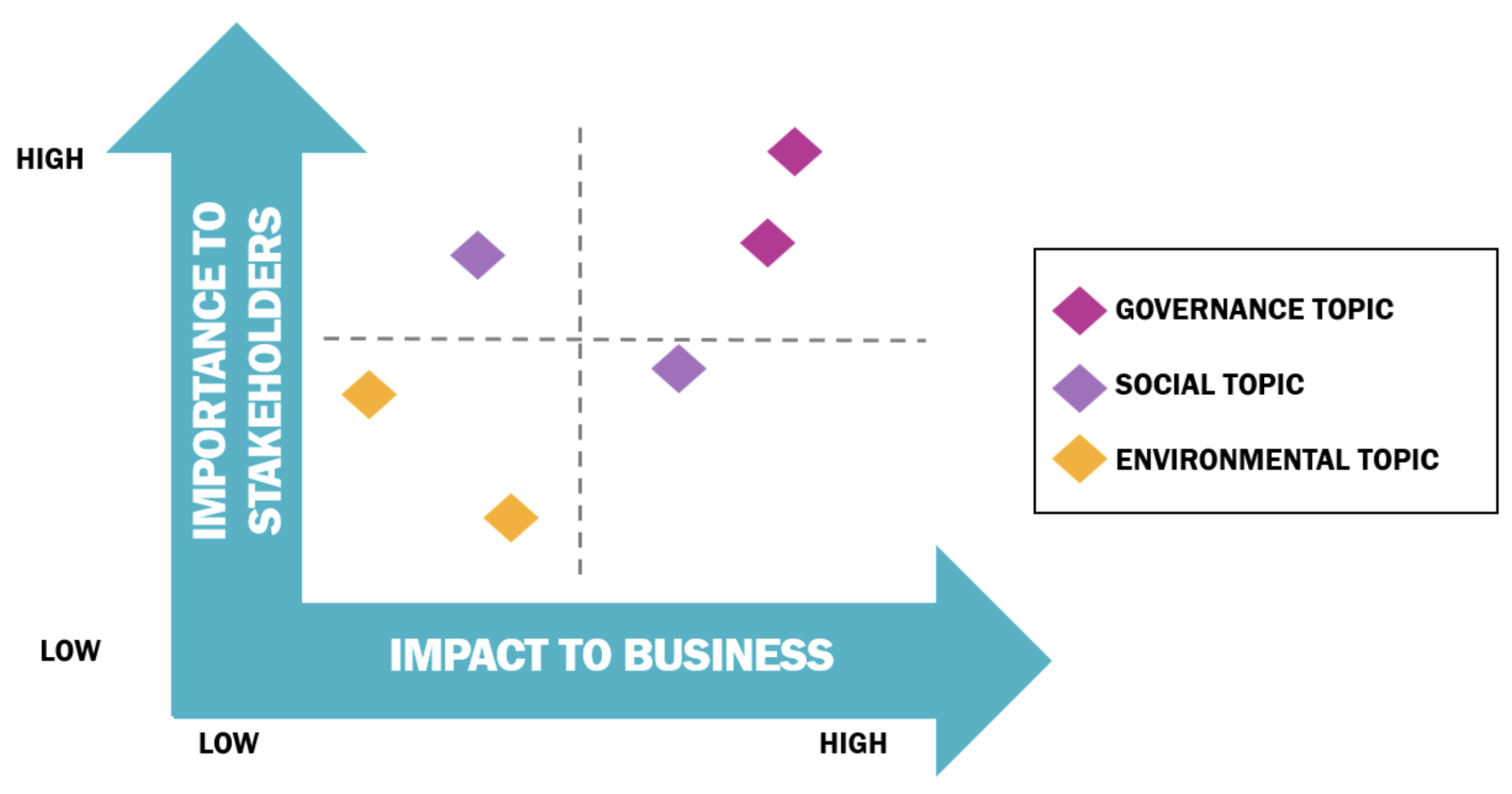
Single materiality assessments traditionally focused on sustainability risks and opportunities affecting financial performance. Growing recognition of environmental and social impacts, alongside disclosure requirements, has expanded the scope of materiality assessments.
The concept of “Double Materiality” has emerged with a renewed and enhanced recognition of externalities in the form of an “inside-out” or “outward” evaluation of the organisation’s measurable impacts on its external operating environment and stakeholder ecosystem. Double materiality surfaces impacts, risks, and opportunities across the value chain that a financial-only lens would miss, strengthening companies’ resilience toward reputational and regulatory risks.

Key Differences between a Single and Double Materiality Assessment
Regulatory and voluntary frameworks increasingly recognize double materiality:
- The Corporate Sustainability Reporting Directive (CSRD) and its accompanying European Sustainability Reporting Standards (ESRS) retain Double Materiality as a foundational principle, even after the EU’s March 2026 Omnibus I Directive narrowed CSRD’s mandatory scope.
- The AA1000 Stakeholder Engagement Standard (AA1000SES) underpins how organizations credibly evidence “inside-out” impacts at the heart of a Double Materiality Assessment.
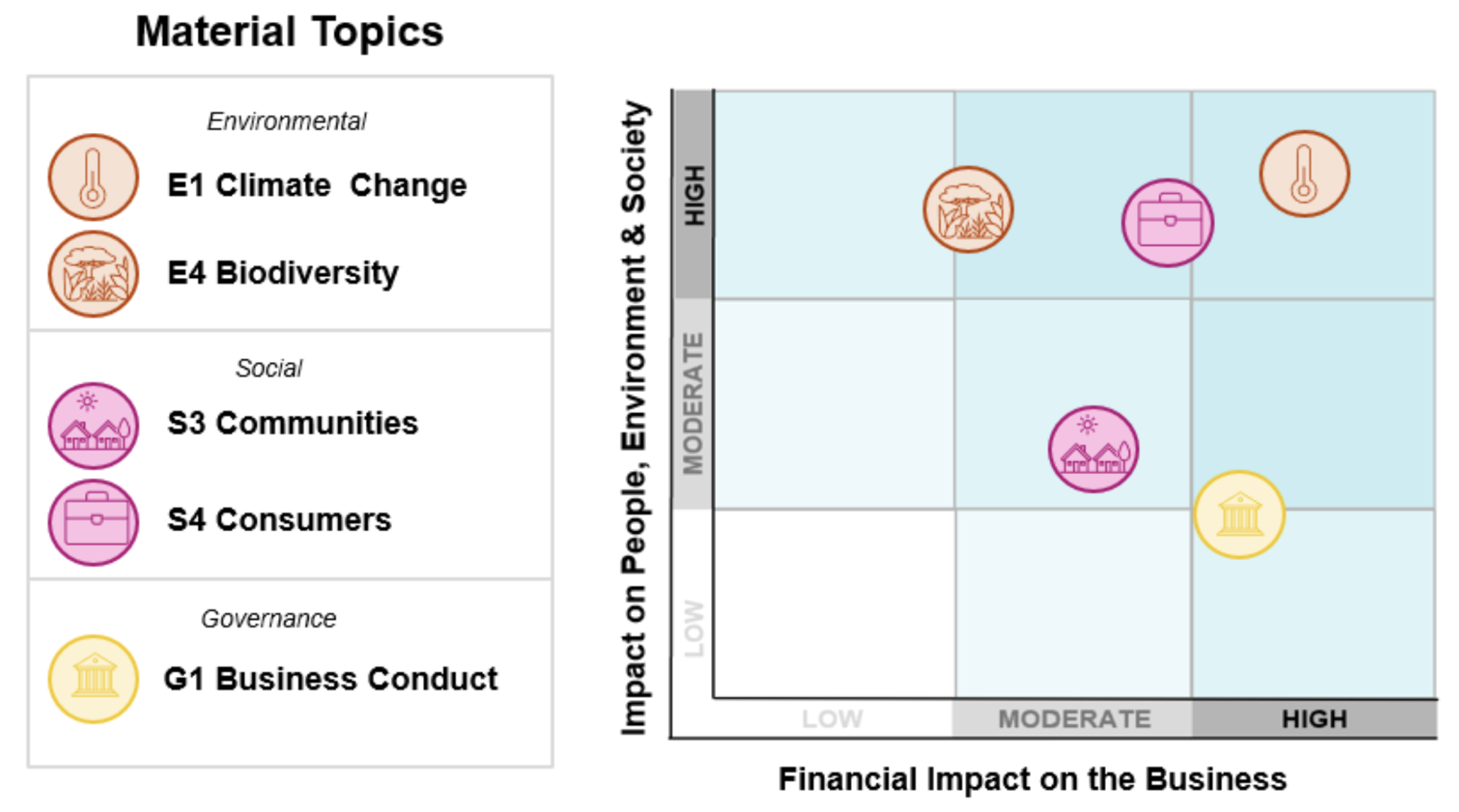
The central business question is whether understanding impacts on people and the environment improves organizational performance.
Conducting a Double Materiality Assessment (DMA)
A DMA typically follows five steps to identify and prioritize sustainability-related impacts, risks, and opportunities (IROs):
- Define the Business Context: Map operations and the value chain to identify relevant sustainability topics.
- Identify and Prioritize Stakeholders: Map stakeholders based on their relationships to the organization and potential exposure to impacts.
- Assess Impacts, Risks, and Opportunities: Identify and evaluate actual and potential positive and negative impacts on people and the environment, alongside financial risks and opportunities, using research, stakeholder engagement, and supporting evidence.
- Synthesize and Validate Findings: Prioritize IROs and validate conclusions with stakeholders and leadership.
- Integrate and Disclose Priorities: Apply findings to strategy, risk management, and disclosures.
Balancing Rigor with Practicality
A practical DMA balances comprehensive analysis with proportionate effort:
- Comprehensive coverage: Consider relevant topics, operations, value chain relationships, and affected stakeholders.
- Proportionate stakeholder engagement: Tailor engagement methods and intensity to stakeholder needs, business realities, and the significance of potential impacts. Standards such as the AA1000 Stakeholder Engagement Standard (AA1000SES) provide guidance for designing inclusive, meaningful, and manageable engagement processes.
- Decision-useful outcomes: Present clear priorities and evidence leadership can act on.
The goal is a defensible assessment without unnecessary complexity or stakeholder fatigue.
What Double Materiality Reveals
Consider a waste management company assessing Water Management (ESRS E3: Water and Marine Resources).
Financial materiality identifies water-related costs and opportunities. Double materiality also examines effects on nearby communities and ecosystems.
IRO Example: Waste Management Company
Material Topic: Water Management – ESRS E3: Water and Marine Resources
* Single Materiality Assessment
** Double Materiality Assessment
Double Materiality as a Value Driver
When conducted effectively, a Double Materiality Assessment (DMA) can deliver business value well beyond regulatory compliance. By examining both the sustainability issues that affect financial performance and the organization's impacts on people and the environment, a DMA provides a more comprehensive view of risks, opportunities, and potential drivers of long-term value. This broader perspective can help organizations anticipate emerging risks, improve resource allocation, and make more informed strategic decisions.
Three areas illustrate its potential value: access to finance and financial returns, reporting efficiency, and long-term strategy.
Access to Finance and Financial Returns
MSCI research covering more than 4,000 issuers found that companies with the highest ESG ratings had an average cost of capital approximately 14% lower than those with the lowest ratings, across equity and debt markets. The ratings assess industry-specific financially material sustainability issues, suggesting a relationship between managing those issues and access to capital.
Emerging research suggests additional value from double materiality. A study of more than 220 listed EU companies in environmentally sensitive sectors associated double materiality disclosures with higher firm valuations. Separate research found stronger benefits among early adopters combining double materiality with stakeholder engagement and strategic integration.
Higher-rated companies had lower average costs of capital.
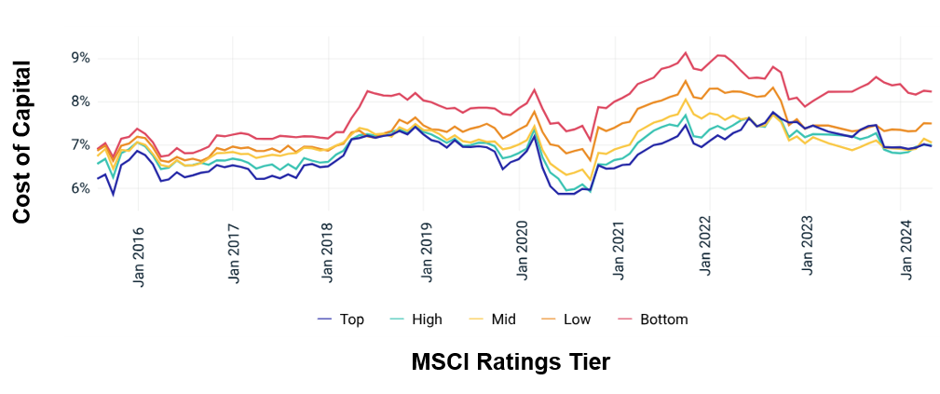
Data period from August 2015 through May 2024. MSCI divided the entire study sample (n = 4,319 unique issuers) into quintiles each month based on IAS score, which underlies the MSCI ESG Rating, and compared each quintile's cost of capital monthly (106 observations). The difference between the top and bottom ESG quintiles over the study period was significant at a 99% confidence level using the Mann-Whitney U test. Source: MSCI ESG Research
Regulatory Compliance and Reporting Efficiency
A well-designed DMA can reduce duplication across reporting, risk management, and assurance. Aligning data collection with ESRS and GRI allows organizations to reuse evidence across disclosure requirements, improving efficiency and transparency.
CSRD assurance requirements add another incentive: a DMA informed by standards such as the AA1000 Stakeholder Engagement Standard (AA1000SES) can provide a clearer evidence trail for assurance and greater confidence in disclosures.
Long-term Strategic Lever
A DMA should and can evolve with the business to ensure that it is not a one-time exercise. Changes in regulation, stakeholder expectations, markets, operations, and strategy can all shift which issues are material; the World Economic Forum calls this “dynamic materiality”1. Consistent with EFRAG guidance, organisations can treat the DMA as a living process, updating it as circumstances change. There are multiple ways to approach this: consistently conducting pulse checks on the impact of emerging legislation, organization risks, and changes to the value chain help to maintain a “dynamic” approach, and many of these actions can be paired with existing organisational processes and systems to avoid overburdening stakeholders.
The impact-lens of the DMA helps to anticipate and mitigate long-term risks by including the entire value chain in the assessment. Integrating Double Materiality considerations into annual planning cycles can then provide value to the business through identifying impacts, risks and opportunities continuously, rather than treating the assessment as a periodic, standalone exercise concerned only with the risks and opportunities to the short-term bottom line.2
How organizations can realize value from Double Materiality Assessments
The business case for Double Materiality depends less on the assessment itself than on what an organization does with the findings. A DMA creates value when it informs capital allocation, risk management, strategic planning, stakeholder engagement, and performance measurement, rather than remaining a standalone reporting exercise.
Three actions help turn findings into lasting value:
- Ground priorities in stakeholder and market intelligence: Engagement informed by the AA1000SES helps reflect stakeholder perspectives and business realities while minimizing fatigue.
- Build a methodology that can adapt: Aligning topic definitions with ESRS, GRI, and ISSB supports interoperability as regulations and business conditions change.
- Integrate findings into business decision-making: Only 46% of companies that participated in the S&P CSA in 2024 had developed metrics to track their material impacts on the environment and society.[1] This highlights an opportunity to better connect materiality findings with measurable outcomes. Establishing clear ownership, defining performance targets, and integrating DMA findings into existing risk management and strategic planning processes can help close this gap.
Ultimately, a DMA creates value when materiality insights inform decisions, manage risks, and support long-term performance.
Learn more about AccountAbility's Double Materiality Assessment services here.
1 World Economic Forum, Embracing the New Age of Materiality, Harnessing the Pace of Change in ESG (2020)
2 EFRAG, Implementation Guidance 1: Materiality Assessment (May 2024), FAQ 7
Fill in your details to view this article
Similar Insights